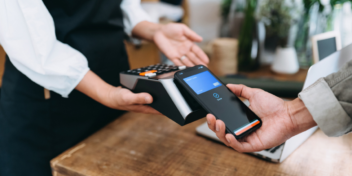

Peer-to-peer (P2P) payments provide a convenient way to send and receive money directly between friends, family, merchants, or service providers through mobile apps or in-app features, including popular options like Venmo®, Cash App®, Paypal®, Apple Cash®, and Zelle®. To say P2P payment usage is growing may be an understatement—in the U.S. alone, projections forecast that over 180 million users will transfer about $2.2 billion in 2026, up from 136 million users and $788 million in transactions just 5 years ago.
Whether you’re new to P2P payments or not, it’s important to understand how these types of transactions work, including what personal or financial information is involved, and the limited protections they may offer against potential scams. Being vigilant about whom you send payments to, as well as knowing the warning signs of fraudulent transactions, can help you continue to enjoy the benefits (and mitigate the risks) of P2P payments.
How Do P2P Payments Work?
With payment apps, you can make digital money transfers domestically, and in some cases internationally, with a few short steps. Depending on the P2P method you wish to use, you may need to download an app, or, in the case of services like Zelle®, enroll through your financial institution’s online banking platform.
After enrolling or creating an account with contact information like an email address or phone number, and linking your bank account, debit card, or credit card to fund your payment, you can set up a payment. Simply choose the recipient, how you want to fund the payment (if, say, you have multiple cards or accounts set up in your profile), how much you wish to send, and, optionally, note what the payment is for. When receiving funds, you’ll be notified of a transfer, then choose how you want those funds to be used or directed from the app.
Keep in mind that your transactions may be limited by app policies and the funds you have available. There may also be tax reporting required by your payment app depending on the type of transactions you make or receive. Fees and restrictions often vary by platform policy and transaction type.
While P2P platforms typically use encryption and fraud detection to secure your payments, they may not offer protection against the most common type of missteps or scams. Since payment apps house sensitive personal and financial information, consider taking the following precautions for every payment you send:
Treat P2P payments like cash
P2P payments are transferred quickly, if not instantly, which means that money sent is money spent. If you’re working with a merchant, don’t pay for a product or service you haven’t received, since there may not be restitution otherwise.
Only send payments to people you know and trust
Be cautious of sending money to people you’ve never met, even under circumstances that seem perfectly legitimate.
Confirm all recipient information before sending payment
Mistakes can happen! Make sure that you’re sending your payment to the right person by confirming their username, phone number, and/or email address.
Don’t share login credentials
This includes any calls you have with P2P or financial institution customer service—neither will ask you for sensitive account information over the phone. In addition to platform pins or passwords, never share two-factor (2FA) or multi-factor authentication (MFA) codes with others. Note: an exception may be on calls directly with your financial institution or P2P app. If using a known, trusted line (typically, this is a phone number listed on your bank card or on an official website), you may be asked to confirm your identity through a code sent to your device.
Ensure your payment app is up to date
Apps and features regularly issue updates to improve their security features, including offering (or requiring) the addition of 2FA, MFA, and/or biometric login methods to help protect your account.
Be careful when handling your phone around strangers
It may seem easier to have your recipient type in their username, but be weary of handing off your device to someone else. Contriving an emergency, or making an excuse for borrowing your phone, is one way that scammers can easily access your account information. Bonus tip: staying logged out of your banking or P2P apps may help avoid some of these risks.
Common Payment App Scams
The quick (and often irreversible) nature of P2P payments has made them the target of many different types of scammers. Be aware of the following common scam types that have emerged in recent years:
Impersonation
In these scams, you’ll receive a call, text, or email from someone claiming to be an organization or company you trust, such as a business, utility company, financial institution, or even a P2P platform. Their message will claim that there is an issue with your account, and that you need to take action to unlock or confirm your account details. It may include a link which may include malware or lead to a faked site meant to capture your login information. Look for these, which may help you identify a dupe:
- Misspellings, including in the email address or website link, or poor grammar
- Addressing recipients generically (“Dear User”)
- A sense of urgency (“Take action now…”)
Remember, do not attempt to confirm the legitimacy of the sender by calling the phone number they use or provide. Again, a phone number listed on your bank card or on an official website is a more reliable way to get in contact with your financial institution or payment app’s customer service.
“Accidental” Transfers
One common scam involves receiving funds from someone you don’t know—or even someone whose name you may know, with an unfamiliar number or username. This payment is followed by a message from the sender claiming that this transfer was a mistake and a request that you return the money. But don’t click anything! If you return the money yourself, the sender may later dispute the original transfer. The original payment could then be reversed, while the money you sent back is gone—leaving you out the amount you “returned.” This is particularly risky when the original transfer was made using stolen or fraudulent funds. Be sure to flag these types of transactions promptly to your financial institution and/or P2P platform.
Fake Sellers
Perhaps you see a social post about cute litter of purebred puppies, or a listing for an incredible apartment at a below-market price. In these types of scams, you’ll be asked to send a deposit sight unseen in order to secure this opportunity of a lifetime. Beware of online or remote sellers offering products or services that seem too good to be true—because they often are, and you may not see your “deposit” again!
What to Do If You Suspect You’re Being Scammed
If you notice an unauthorized transaction in your payment app, or if you believe someone contacting you may be targeting you for a scam, here are some next steps you can take:
- Alert your financial institution. If your payment app includes bank account information, and particularly if this account was implicated in a fraudulent transaction, let your bank know. They may ask you to dispute the transaction through their systems as well.
- Contact your payment platform. Ask for assistance through their customer service and dispute the transaction or otherwise follow their recommended next steps.
- Update your login information. It’s a good idea to change your payment app password or pin promptly, especially in the case of unauthorized fund transfers. However, be cautious if you receive unprompted communication about updating your password—links included may be fake.
- Report scams to the relevant authorities. You can log scams with the Federal Trade Commission (FTC), Internet Crime Complaint Center (IC3), or the Better Business Bureau (BBB), depending on the nature of the scam.
- Continue to monitor your accounts. Repeat these steps if further fraudulent activity occurs.
SouthEast Bank is committed to arming customers with the tips and resources to help protect their information and use their money with confidence. Explore related topics in our Knowledge Hub, and contact us if you have any questions related to your account.
Information contained in this blog is for educational and informational purposes only. Nothing contained in this blog should be construed as financial, legal or tax advice. An attorney, financial advisor, and/or tax advisor should be consulted for advice based on your circumstances.
Links to other websites or references to services or applications are provided as a convenience only. A link does not imply SouthEast Bank’s sponsorship or approval of any other site, service or application. SouthEast Bank does not control the content of these sites, services or applications.